History
The Târgu Mureș Narrow Gauge Railway System
The narrow-gauge railway system centred on Târgu Mureș (Hungarian: Marosvásárhely), known to enthusiasts as the “Mocănița of the Transylvanian Plain and Niraj Valley,” represents a monumental chapter in Romania’s rail transport heritage. It was built to move salt from the mines at Praid (Parajd), timber from the forests of the Niraj valley, and grain and livestock from the plains of Band, Miheșu de Câmpie and Teaca — goods wanted not only within Transylvania but largely destined for Budapest and Vienna.
Origins and Construction
The idea of a narrow-gauge line crossing the Niraj valley and the Transylvanian Plain was first raised at the end of the 19th century, and in 1904 the authorities of Mureș-Turda County gave it their backing. Construction did not begin until 1912, when the authorisation was granted for all sections at a cost of 72,593 crowns per kilometre. Work started in August of that year, but progressed slowly: wartime preparations had caused shortages of track materials and labour, and in the summer of 1913 devastating floods washed out embankments and already-laid track, forcing a revision of the original plans.
The concessionaire was the Societatea Căilor Ferate de Interes Local Mureș-Turda (the Mureș-Turda Local Interest Railway Company), registered in Budapest at the Hungarian Agrarian and Annuity Bank with private capital, and empowered to build a 760 mm network of approximately 200 kilometres.
Opening, 1915
Work resumed in early 1914, only to be delayed again by the outbreak of war. Technical trials were conducted on 15–17 January 1915 by a senior commission of the Ministry of Communications from Budapest. Following satisfactory results, the narrow-gauge railways of the Mureș basin were formally placed in regular service on 31 January 1915, connecting Târgu Mureș with the Niraj valley, Praid, and the Transylvanian Plain settlements simultaneously.
Between 1915 and 1919 the railway’s traffic was overwhelmingly military — troops, food and livestock in support of the Austro-Hungarian army engaged in the First World War.
The Interwar Years
After the First World War and the union of Transylvania with Romania, the narrow-gauge lines remained the property of the Mureș-Turda company from 1919 but passed into the operation of CFR, the Romanian state railway. By a convention of 4 March 1926, published in the Official Monitor no. 72 of 28 March 1926, the Romanian State sought to purchase the company’s entire shareholding, which would in practice have made it the sole authority over the narrow-gauge railways of the Mureș basin. No readily accessible published source documents payment to the shareholders.
The Second World War
Under the Second Vienna Award of 30 August 1940, the network was severed in two: the Band–Miheșu de Câmpie section remained in Romania, while the remainder fell under Hungarian administration. With Târgu Mureș now needing a direct connection toward Budapest, approximately 17 kilometres of new narrow-gauge line were laid between Iuda and Lechința (a CFR regional document gives the length as 16.7 km), opening on 15 December 1941. This extension made the system one of the longest narrow-gauge networks in Transylvania: approximately 191 kilometres before 1941, rising to roughly 206 kilometres after the Iuda–Lechința connection, to which could be added forest railways of uncertain total extent connected via the stations at Sovata and Câmpu Cetății.
In 1942 the Hungarian and Romanian state railways (MÁV and CFR) bought the shares and the Mureș-Turda Local Interest Railways Company was abolished, its Hungarian portion absorbed by MÁV and its Romanian section by CFR.
In September 1944, retreating German troops blew up bridges, viaducts, switches and unevacuated locomotives and wagons, and mined the level crossings. From that autumn the narrow-gauge lines entered a long process of reconstruction and then modernisation, affecting the permanent way, the traction system and the traffic safety installations. After the war the railway was repaired and passed into CFR ownership.
Decline and Closure
The network enjoyed its heyday until the 1970s. The Sovata–Praid segment was closed on 25 March 1975; the rails were lifted and much of the alignment was subsequently built over.
The end came in 1997. On 1 April CFR halted services on all remaining narrow-gauge lines, and the railway was placed into conservation. From 1999, locomotives and rolling stock were scrapped or sold for scrap.
Preservation Today
The Sovata–Câmpu Cetății section was rebuilt in 2010–11 and tourist operation began in 2011. That same year saw rails and sleepers lifted by a private firm between Târgu Mureș–Râciu and Teaca–Lechința.
Today two segments survive. On the eastern network, a section between Sovata (Szováta) and Câmpu Cetății (Vármező) carries regular steam-hauled tourist services — commonly reported as 14 kilometres in tourism sources, though the Romanian Wikipedia entry gives 11 km. On the old Transylvanian Plain line, a single 35-kilometre section remains between Râciu (Mureș County) and Teaca (Bistrița-Năsăud County), administered since 2 April 2018 by Asociația Mocănița Transilvaniei, whose volunteers continue to preserve the track and rolling stock. Together these ensure that this historic 760 mm system remains alive for historians and railway enthusiasts alike.
Route and Operation Notes
Leaving Târgu Mureș at approximately 306 metres altitude, the line ran north of the Mureș river, crossed the standard-gauge Târgu Mureș–Luduș railway at grade, and entered the Transylvanian Plain. From Band it climbed north-west up the Comlod valley to Ocnița, before descending through orchards and vineyards to the terminus at Lechința. Principal goods carried were sugar beet, timber and fruit.
On the Niraj valley line, the railway became part of daily life: workers and students commuted to Târgu Mureș, villagers brought their produce to market, and townspeople rode out to Sovata for holidays and excursions. Timber, sugar beet and salt from the Praid mine all moved by rail.
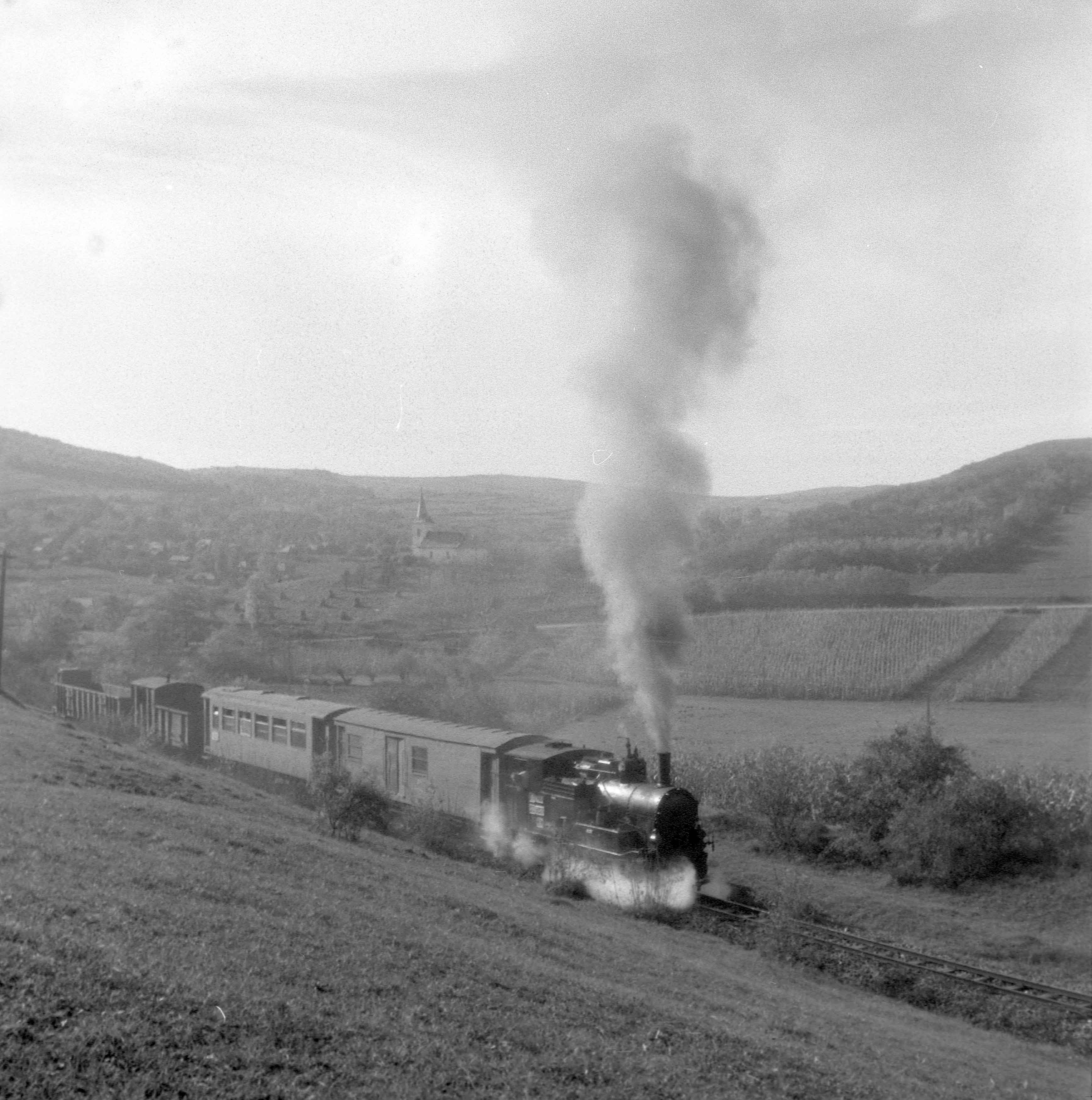
13 October 1993, “Uzinele 23 August” 764.159
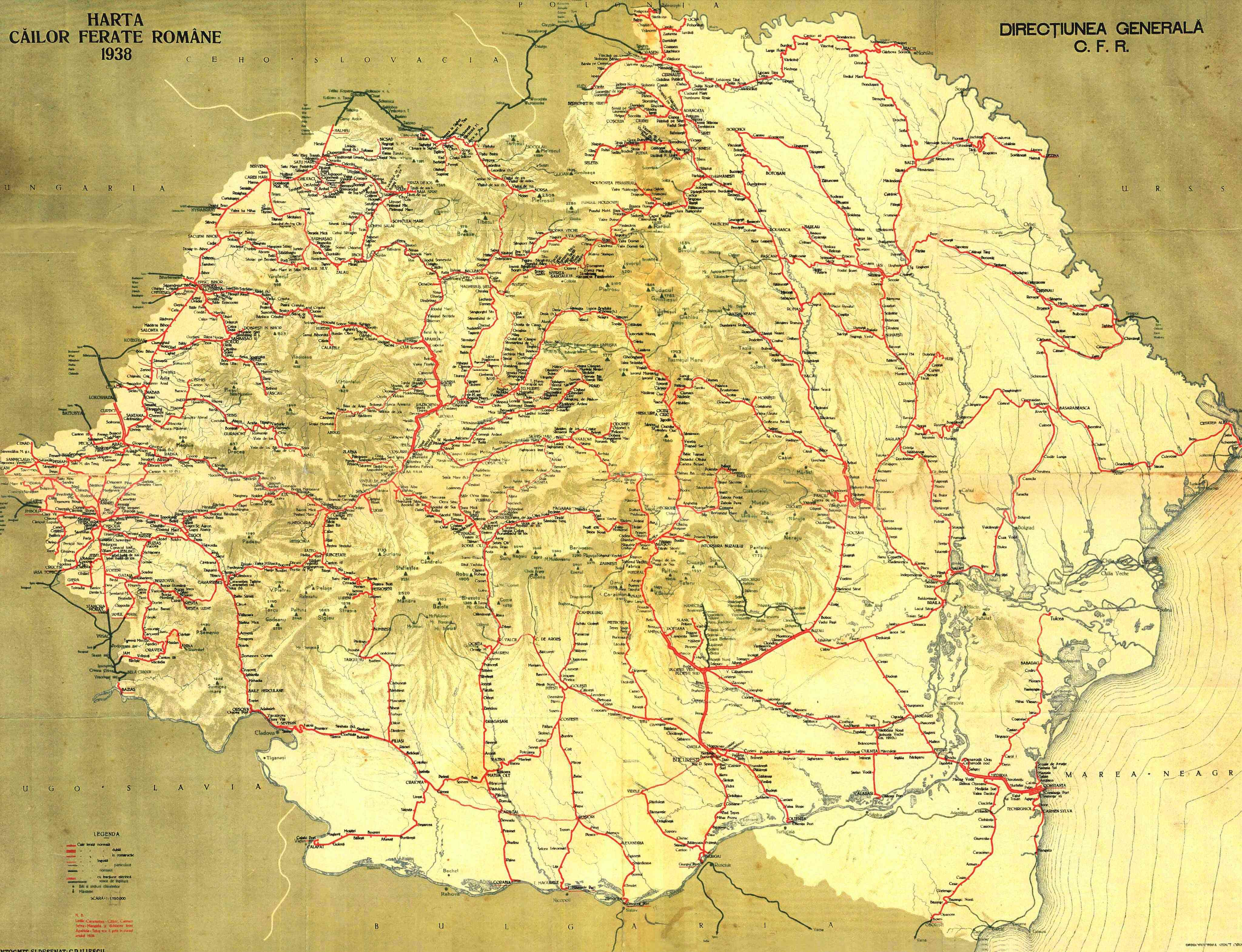
Romanian State Railways map in 1938
Bibliography & Sources
Print Reference:
- Organ, John. (2008). Romania & Bulgaria Narrow Gauge. (Vic Mitchell, Series Ed.). Midhurst, West Sussex: Middleton Press. ISBN 978-1-906008-23-9. (Referencing pages 13–18, “Târgu Mureș” section).
- Monitorul Oficial al României. Partea 1, 1942-08-04, nr. 179, (page 6561).
Digital Sources & Community Archives:
- Asociația Mocănița Transilvaniei: Historical background and preservation initiatives on the official Mocănița Transilvaniei project site, including the history of the Târgu Mureș–Lechința line.
- Mini Niraj: “Calea ferată de pe Valea Nirajului: istoric,” mininiraj.ro.
- Mocănița Sovata: Route and locomotive history, mocanitasovata.ro.
- Wikipedia (Hungarian): “Marosvásárhely–Parajd-vasútvonal”.
- Wikipedia (Romanian): “Calea ferată îngustă Târgu Mureș–Praid”.
- Trenuletz Forum: “408 : Târgu Mureș – Băile Sovata (linie îngustă),” Forumul pasionaților de trenuri din România.
Notes on Sources and Figures:
- Published figures for total network length vary; the commonly cited components (~82 km + ~81 km + 28 km) total approximately 191 km, while one account gives 186 km for the pre-1941 network.
- The Sovata–Câmpu Cetății tourist section is variously reported as 11–14 km.
- The 1942 MÁV share purchase and the September 1944 demolitions appear in detailed Romanian-language histories but lack independent archival confirmation in readily accessible sources.